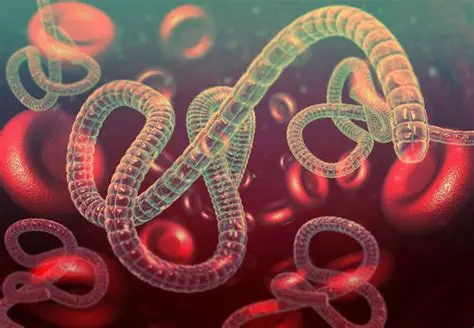
What is Ebola, and why do scientists and public health experts closely monitor it? Here’s what you need to know!
Recently, Ebola outbreaks have occurred in several African countries, including the Democratic Republic of the Congo (DRC) and Uganda. What is Ebola? Here’s what you need to know! To start, it’s important to keep in mind that Ebola, similarly to hantavirus, is not as contagious as COVID-19. Unlike COVID-19, Ebola does not typically spread through the air. Ebola is caused by a virus known as the Ebola virus. Ebola was first identified in 1976 and was named after the Ebola River in what is now the Democratic Republic of the Congo. Depending on the outbreak, Ebola has had mortality rates ranging from about 25% to 90%, with an average case fatality rate of around 50%. Ebola disease is transmitted from wild animals to humans. These wild animals include non-human primates, such as monkeys and chimpanzees, fruit bats, porcupines, etc. Ebola can also spread through human-to-human contact, through bodily fluids like blood, organs, secretions, or surfaces contaminated with these fluids, like clothing. Ebola virus disease symptoms typically appear 2 to 21 days after exposure. These symptoms are initially flu-like and dry, before advancing and worsening to gastrointestinal issues such as nausea, chest pain, diarrhea, vomiting, and abdominal pain. In severe or fatal cases, there is a last stage that can cause unexplained bleeding, bruising, oozing, blood in vomit or stool, bleeding from needle puncture sites, bleeding in the nose, gums, and genitals, confusion, irritability, and aggression. Although there is no simple cure for Ebola, early medical treatment and supportive care, and recently developed antibody treatments can improve a patient’s chances of survival. An infected individual is not contagious and cannot transmit the virus until they begin actively showing symptoms. The best way to avoid catching Ebola is to avoid contact with the bodily fluids of an infected person. It’s also important to avoid direct contact with infected individuals and contaminated materials. Finally, there is a vaccine that is available to prevent Ebola, called Ervebo, or rVSV-ZEBOV, which is a single-dose FDA-approved vaccine. Epidemiologists and public health experts work to track Ebola outbreaks, identify how the virus is spreading, and help prevent further infections. Stay safe!