Most people understand that viruses can cause outbreaks. Viruses typically start by infecting the initial “host” and then spread amongst the population, creating a chain of infections. This is why the best way to evade a virus’s spread is to quarantine. Many viruses have a sort of “peak” or “wave” where cases drastically increase until they eventually decline. Just like the COVID-19 surge in 2020, cases dropped afterward thanks to vaccinations and public health precautions, like staying inside or staying 6 feet apart. However, there has been an increase in cases of the Nipah (or NiV) virus in South/Southeast Asia. What is the Nipah virus, and what does it do?
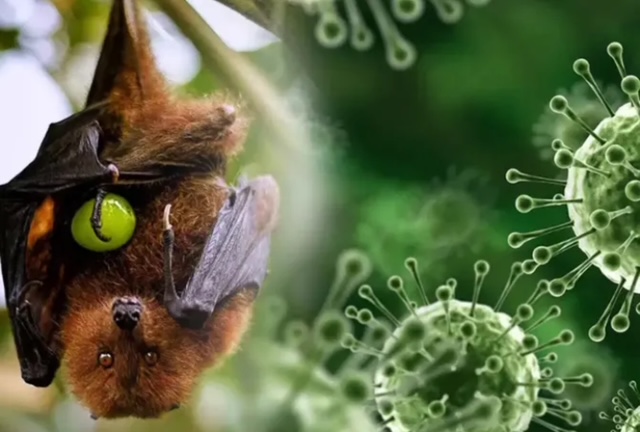
To start, the Nipah virus is far less contagious than a virus like COVID. However, it is much more lethal. The reason for being less contagious is that COVID is spread by an infected person’s respiratory droplets, sneezing, and coughing. On the other hand, the Nipah virus is spread through bodily fluids (urine, saliva, blood). The Nipah virus has a primary/reservoir host, which is the fruit bat. This means the virus lives and develops naturally inside the bat. The fruit bats then contaminate the fruit using their saliva (while eating it). Next, when a human eats the fruit, they are also infected. The fruit bat may also infect an animal that a human eats directly, or the bats could infect the fruit, which is eaten by an animal, then the animal is eaten by a human.
As mentioned earlier, this virus does not spread easily, and current cases remain limited to parts of South Asia. The World Health Organization (WHO) states that this is not a big global emergency that warrants travel to that area being prohibited. People should remain cautious about food safety and exposure risks, especially in affected regions. At this time, there are no confirmed reports of cases reaching the U.S., and this virus is not considered globally spread. Staying informed and practicing good hygiene are important ways to reduce risk.