(DISCLAIMER: The information is continuously changing and updating)
In my last blog entry, I wrote about Cyclospora, what it is, and how it can affect the foods we eat. Since then, there have been more food recalls and new information about several foodborne illness outbreaks.
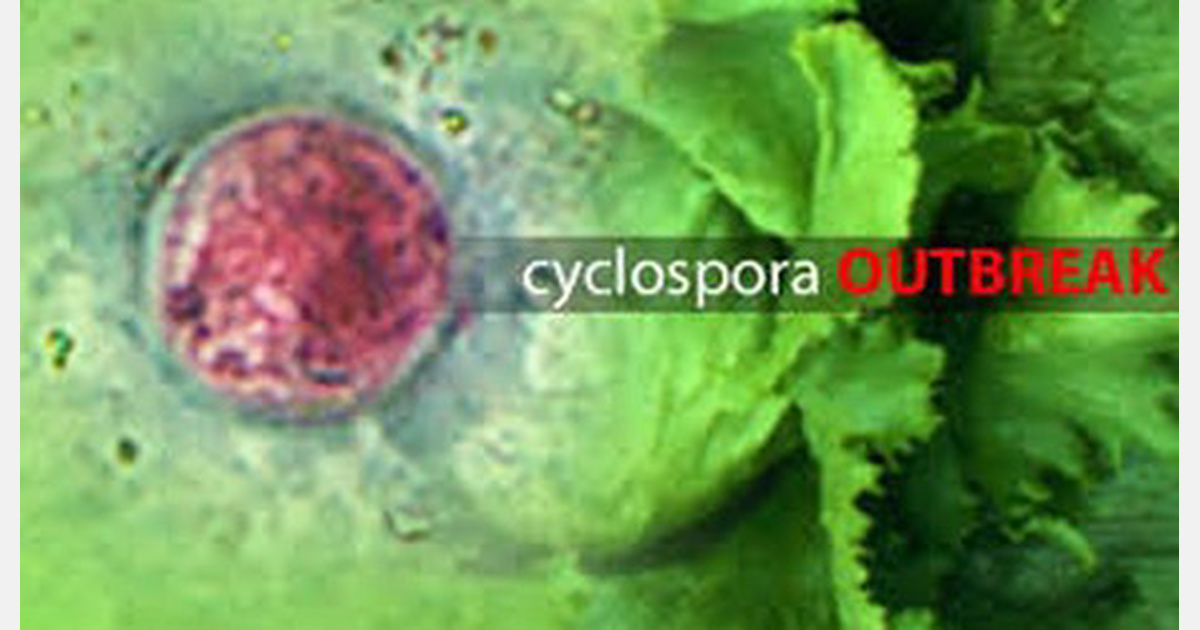
Since my last blog entry, there has been an important update involving the Cyclospora outbreak. The FDA and CDC have been investigating a multi-state outbreak of Cyclospora illnesses linked to iceberg lettuce sourced from central Mexico and recalled by Taylor Farms de Mexico.
As of July 24th, 1,947 illnesses across nine states were reported in this particular outbreak, with at least 98 hospitalizations and no reported deaths. The nine states with illnesses connected to this outbreak were Illinois, Indians, Kansas, Kentucky, Michigan, Ohio, Oklahoma, Pennsylvania, and West Virginia.
Food recalls are important to pay attention to because recalled products may already be sitting in your refrigerator, freezer, or pantry. I mentioned that Cyclospora seemed to affect lettuce and other leafy greens. However, spinach, salad mixes, basil, cilantro, parsley, and snap peas have also been linked to Cyclospora. This doesn’t just affect grocery stores; it affects restaurants as well. These companies that have contaminated vegetables also distribute to restaurants, which means you should avoid eating these foods completely for the time being.
Below is a list of some recent food recalls, why the products were recalled, and what you should look for at home.
What should you do?
Check your refrigerator and do not eat products included in the recall. Follow the recall instructions for returning or disposing of the products.
WALMART MARKETSIDE LETTUCE – Cyclospora
Some recalled Marketside products sold at Walmart include:
Marketside Iceberg Salad, 12 oz. and 24 oz., with Best by Used dates of July 18 – August 3, 2026.
Marketside Shredded Lettuce, 8 oz. and 16 oz., with Best by Used dates of July 18 – August 3, 2026.
AMY’s KITCHEN LENTIL SOUP – Packaging defects
Amy’s Kitchen has recalled over 184,000 cans of Organic Lentil Soup due to packaging defects that may lead to it spoiling prematurely.
MIDWEST POULTRY SERVICES EGGS – Salmonella Risk
A major egg recall is taking place right now from Midwest Poultry Services due to salmonella risk. Recalled eggs will have an identifying code number printed on the left or right side of the carton in ink. Cartons that have expiration dates between July 20, 2026, to August 17, 2026. Codes P-1950 or 0840962 with a Julian Date between 157 and 184 are affected, and they should not be consumed, sold, or served.
FYI: Julian dates, on packaging, are basically a number that tells you which day of the year the product was made or packages. Instead of writing a regular date such as June 6, 2026, a manufacturer may use a number from 001 to 365 (or 366 in a leap year).
For example:
001 = January 1
032 = February 1
100 = April 10
157 June 6
184 = July 3
The recall of eggs includes several brand names such as Kroger, Simple Truth, Brookshire’s, Country Morning, and Cal-Maine Sunups. If you have any of these eggs, do not eat or serve them.
FRESH & READY BURRITOS
For vegetarians or those allergic to soy, Fresh & Ready Foods LLC Burritos may contain a soy allergen and sausage meat despite being marketed as vegetarian. These production dates are between July 9 and July 12, 2026.
The burritos with these universal product codes that are affected:
(Universal product codes or UPC are the numbers on a barcode)
Sprig & Sprout Spicy Breakfast Burrito: UPC 1 00001 00029 7
Fresh and Ready Spicy Breakfast Burrito: UPC 1 00001 00029 7
GREENWISE ORGANIC FROZEN BERRIES – E. coli
GreenWise-brand Frozen Organic Blueberries and Whole Mixed Berries sold at Publix stores may contain E-coli. The products that are affected:
GreenWise Organic Whole Blueberries, 10 oz., UPC 41415-06453
GreenWise Organic Whole Blueberries, 48 oz., UPC 41415-12053
GreenWise Organic Mixed Berries 10 oz., UPC 41415-06753
GreenWise Organic Mixed Berries, 48 oz., UPC 41415-12153
The products were shipped to Publix stores in Alabama, Florida, Georgia, Kentucky, North Carolina, South Carolina, Tennessee, and Virginia.
E. coli 0145 can cause severe stomach cramps, diarrhea, and vomiting. Some infections can become serious, particularly for young children, older adults, and people with weakened immune systems.
What should you do?
Do not eat the recalled berries. Publix says they should be thrown away or returned to Publix for a full refund.
MAPLE LEAF FOODS SMOKED BACON
Maple Leaf Foods Inc. has recalled approximately 12,000 pounds of smoked bacon. While there have been no reported illnesses or injuries, it has been recalled due to the meat not being inspected. This means that its safety upon consumption cannot be confirmed. Suspected smoked bacon packs will have SEP 02 – SEP 07, 2026, written on the side of the package.
PILLSBURY BREAD DOUGH – possible glass fragments in the dough
General Mills is recalling over 735,000 Pillsbury Bread Rolls due to potential glass fragments in the dough. The bread rolls are sent to in-store Walmart bakeries exclusively and are not in regular grocery store aisles. The affected products include kaiser roll dough and hard roll dough. These will have a “Best if Used by” date of either Oct. 12, 2026, or Oct. 13, 2026.
The Science Behind Food Recall
Food recalls can also show us how public health works in the real world. When people in different places become sick with the same illness, epidemiologists and other public health scientists begin looking for patterns. They may ask what the patients ate, where did they purchase the food, when did their symptoms began, and whether laboratory testing shows that their illnesses are connected. Investigators can then trace a food backward through the supply chain from a person’s plate to a restaurant or grocery store, to a distributor, processing facility, or farm.
Sometimes, one contaminated product can travel hundreds or even thousands of miles before anyone realizes there is a problem. That is why food recalls aren’t something we should ignore. Before your next meal, take a few minutes to check your refrigerator, freezer, or pantry for recalled foods. Pay attention to the brand, product name, UPC, lot number, production date, and expiration date. Something to take note of is that contaminated food doesn’t always look, smell, or taste spoiled.
Stay informed, check your food, and stay safe!